

| Citation: |
Zhang Panpan, Xu Qinghai, Marie-jose Gaillard, Mu Huishuang, Zhang Yahong, Lu Jingyao. Research of main plant species's relative pollen productivities and relevant source area of temperate coniferous and broad-leaved mixed forest in Northern China[J]. Quaternary Sciences, 2017, 37(6): 1429-1443. doi: 10.11928/j.issn.1001-7410.2017.06.24

|
Research of main plant species's relative pollen productivities and relevant source area of temperate coniferous and broad-leaved mixed forest in Northern China
-
Abstract
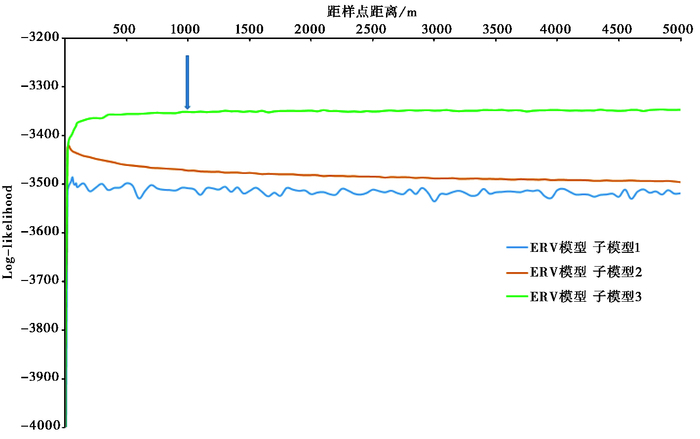
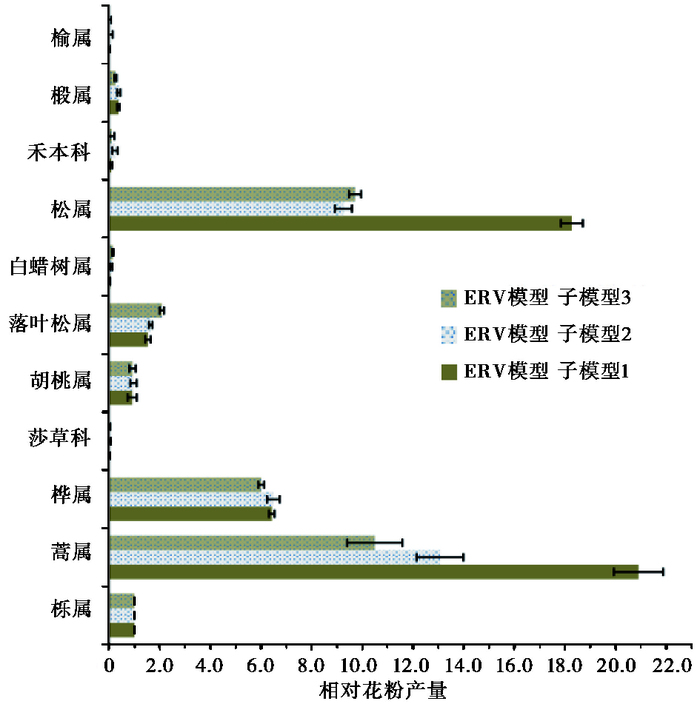
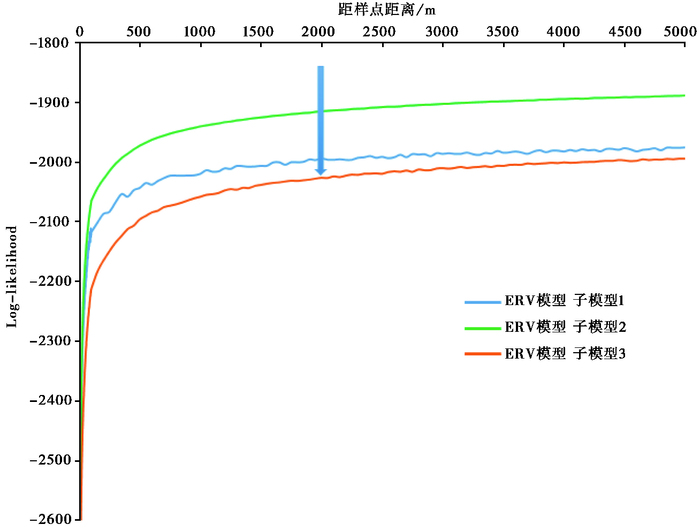
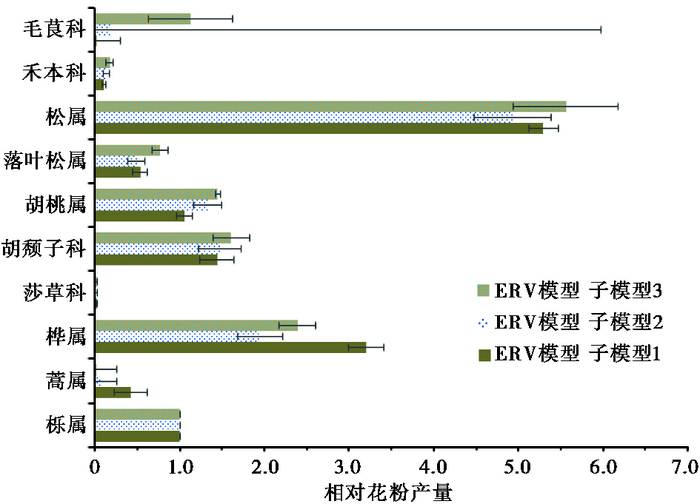
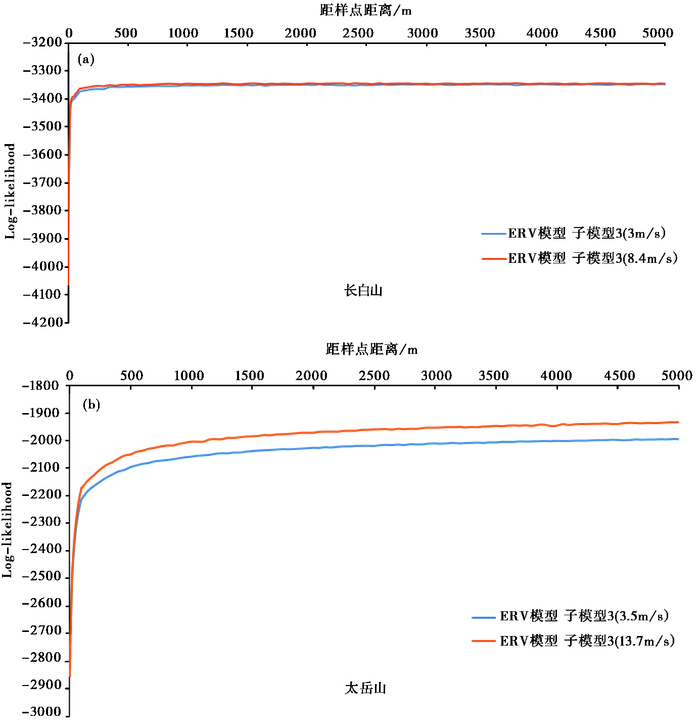
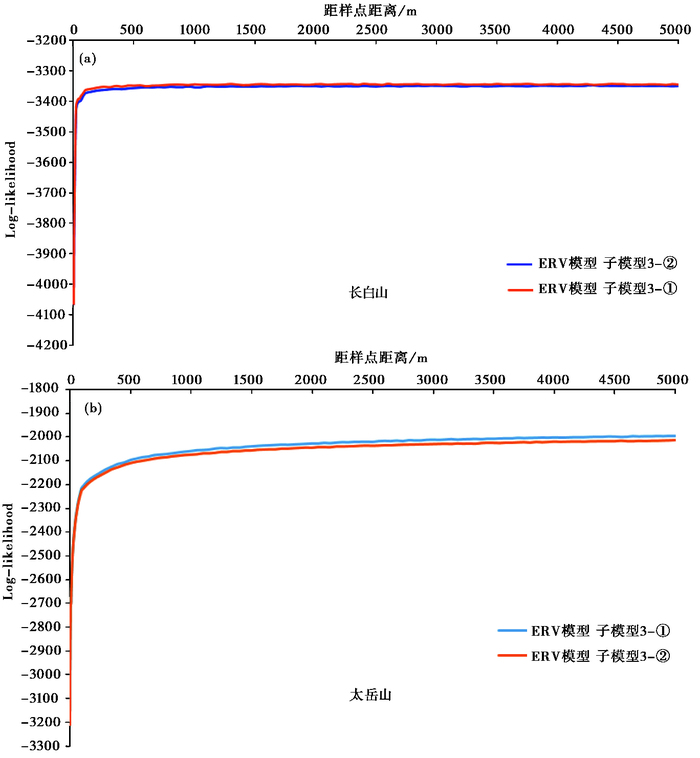
Relative pollen productivity (RPP) and relevant source area of pollen (RSAP) are the most important factors to infect the relationship between pollen and vegetation. Therefore, the pollen production of plants from one region and its pollen source area must be determined to interpret pollen assemblages and recover paleovegetation and paleoclimate correctly. This paper estimated the RPPs for 11 pollen types from Changbai Mountains (42°19'39"~42°41'29"N, 127°50'11"~128°23'53"E; 500~1115m a.s.l.) and 10 pollen types from Taiyue Mountains (36°33'01"~36°53'26"N, 111°59'09"~112°25'17"E; 1100~2300m a.s.l.), as well as RSAP of study areas using the ERV model based on detailed vegetation survey from 36 points in Changbai Mountains and 30 points in Taiyue Mountains. Results show that RSAP of Changbai Mountains is about 1000m, whereas that of Taiyue Mountains is about 2000m. Wind speed and pollen fall speed have little influence on the RSAP. With Quercus as a reference taxon (PPE=1), among 11 pollen types in Changbai Mountains, RPPs of Pinus (9.71±0.24), Artemisia (10.49±1.09), Betula (6.01±0.12) and Larix (2.08±0.09) is relatively high; RPPs of Juglans (0.93±0.13), Poaceae (0.10±0.11), Fraxinus (0.15±0.03) and Tilia (0.25±0.04) is moderate; and RPPs of Cyperaceae (0.01±0.04) and Ulmus (0.0004±0.08) is relatively low. Among 10 pollen types in Taiyue Mountains, RPPs of Pinus (5.56±0.62), Betula (2.39±0.22), Elaeagnaceae (1.61±0.22) Juglans (1.45±0.03) is relatively high; RPPs of Ranunculaceae (1.13±0.50), Artemisia (0.003±0.24), Larix (0.76±0.09) and Poaceae (0.17±0.05) is moderate; and RPP of Cyperaceae (0.007±0.01) is relatively low. Vegetation composition, regional climatic characteristics, different reference taxon, different species of the same reference taxon, and other reasons could make the RPP of same pollen type remarkably different in various areas.
-

-
References
[1] Gaillard M J, Sugita S, Mazier F et al. Holocene land-cover reconstructions for studies on land cover-climate feedbacks. Climate of the Past, 2010, 6 (4):483~499 doi: 10.5194/cp-6-483-2010
[2] Houghton R A, Hackler J L, Lawrence K T. The US carbon budget:Contributions from land-use change. Science, 1999, 285 (5427):574~578 doi: 10.1126/science.285.5427.574
[3] Caspersen J P, Pacala S W, Jenkins J C et al. Contributions of land-use history to carbon accumulation in US forests. Science, 2000, 290 (5494):1148~1151 doi: 10.1126/science.290.5494.1148
[4] Bonan G B. Effects of land use on the climate of the United States. Climatic Change, 1997, 37 (3):449~486 doi: 10.1023/A:1005305708775
[5] Fall S, Niyogi D, Gluhovsky A et al. Impacts of land use land cover on temperature trends over the continental United States:Assessment using the North American regional reanalysis. International Journal of Climatology, 2010, 30:1980~1993 doi: 10.1002/joc.v30:13
[6] Lowe J J, Walker M J C. Reconstructing Quaternary Environments. England:Addison Wesley Longman, 1997. 176~177
[7] 王开发, 王宪曾.孢粉学概论.北京:北京大学出版社, 1983. 14~15
Wang Kaifa, Wang Xianzeng. An Introduction to Palynology. Beijing:Peking University Press, 1983. 14~15
[8] 李文漪等.中国第四纪植被与环境.北京:科学出版社, 1998. 20~138
Li Weiyi et al. Vegetation and Climate of the Quaternary in China. Beijing:Science Press, 1998. 20~138
[9] Cushing E J. Evidence for differential pollen preservation in Late Quaternary sediments in Minnesota. Review of Palaeobotany and Palynology, 1967, 4 (1):87~101
[10] Huntley B, Prentice I C. July temperatures in Europe from pollen data 6000 years before present. Science, 1988, 241 (4866):687~690 doi: 10.1126/science.241.4866.687
[11] Li Yuecong. The Topsoil Pollen Assemblages and the Relationship with Modern Vegetation and Climate in the Typical Ecotope of the Northern China. Beijing:Doctoral Thesis of Institute of Geology and Geophysics, Chinese Academy of Sciences, 2005. 1~159
[12] 许清海, 李月丛, 阳小兰等.中国北方几种主要花粉类型与植被定量关系.中国科学(D辑):地球科学, 2007, 37 (2):192~205
Xu Qinghai, Li Yuecong, Yang Xiaolan et al. The quantitative relationship between some main pollen types and vegetation of the Northern China. Science in China(Series D):Earth Sciences, 2007, 37 (2):192~205
[13] 宋长青, 吕厚远, 孙湘君.中国北方花粉-气候因子转换函数建立及应用.科学通报, 1997, 42 (20):2182~2185 doi: 10.3321/j.issn:0023-074X.1997.20.015
Song Changqing, Lü Houyuan, Sun Xiangjun. The establishment and application of pollen-climate transition function in the Northern China. Chinese Science Bulletin, 1997, 42 (20):2182~2185 doi: 10.3321/j.issn:0023-074X.1997.20.015
[14] 孙湘君, 王琫瑜, 宋长青.中国北方部分科属花粉-气候响应面分析.中国科学(D辑), 1996, 26 (5):431~436
Sun Xiangjun, Wang Bengyu, Song Changqing. The analysis of the pollen-climate response surface for some families genera in the Northern China. Science in China(Series D), 1996, 26 (5):431~436
[15] 许清海, 曹现勇, Tian Fang等.中国北方典型草原区花粉产量及其定量重建古植被的作用.中国科学:地球科学, 2013, 43 (12):2016~2028
Xu Qinghai, Cao Xianyong, Tian Fang et al. Pollen productivity of typical steppe and its effect in quantitative palaeovegetation reconstruction in the Northern China. Science China:Earth Sciences, 2013, 43 (12):2016~2028
[16] Wang Y B, Herzschuh U. Reassessment of Holocene vegetation change on the upper Tibetan Plateau using the pollen-based REVEALS model. Review of Palaeobotany and Palynology, 2011, 168 (1):31~40 doi: 10.1016/j.revpalbo.2011.09.004
[17] Li Y C, Bunting M J, Xu Q H et al. Pollen-vegetation-climate relationships in some desert and desert-steppe communities in Northern China. The Holocene, 2011, 21 (6):997~1010 doi: 10.1177/0959683611400202
[18] 李洁.内蒙古草甸草原区花粉产量和花粉源范围研究.石家庄:河北师范大学硕士论文, 2014. 1~6
Li Jie. Study on Relative Pollen Productivities and Relevant Source of Meadow Steppe Species in Inner Mongolia. Shijianzhuang:The Master's Thesis of Hebei Normal University, 2014. 1~6
[19] 葛亚汶, 李月丛, 李英等.坝上草原相关花粉源范围与相对花粉产量估算.第四纪研究, 2015, 35 (4):934~945
Ge Yawen, Li Yuecong, Li Ying et al. Relevant source area of pollen and relative pollen productivity estimates in Bashang steppe. Quaternary Sciences, 2015, 35 (4):934~945
[20] Li Y Y, Nielsen A B, Zhao X Q et al. Pollen production estimates(PPEs)and fall speeds for major tree taxa and relevant source areas of pollen(RSAP)in Changbai Mountain, Northeastern China. Review of Palaeobotany and Palynology, 2015, 216:92~100 doi: 10.1016/j.revpalbo.2015.02.003
[21] 张井勇, 董文杰, 叶笃正等.中国植被覆盖对夏季气候影响的新证据.科学通报, 2003, 48 (1):91~95
Zhang Jingyong, Dong Wenjie, Ye Duzheng et al. New evidence for the influence on summer climate by the vegetation coverage in China. Chinese Science Bulletin, 2003, 48 (1):91~95
[22] Xu Q H, Xiao J L, Li Y C et al. Pollen-based quantitative reconstruction of Holocene climate changes in the Daihai Lake area, Inner Mongolia, China. Journal of Climate, 2010, 23 (11):2856~2868 doi: 10.1175/2009JCLI3155.1
[23] 穆克华.长白山南地区全新世以来的环境变化.大连:辽宁师范大学硕士论文, 2008. 1~15
Mu Kehua. The Climatic Environmental Changes since Holocene in Changbai Mountains. Dalian:The Master Graduate Thesis of Liaoning Normal University, 2008. 1~15
[24] 王青春, 邓红兵, 王庆礼.基于生物多样性保护的河岸带植被管理对策——以长白山二道白河为例.生态学杂志, 2006, 25 (6):682~685
Wang Qingchun, Deng Hongbing, Wang Qingli. Management measures for riverside belt vegetation based on biodiversity conservation:With Erdaobai River in Changbai Mountains as an example. Chinese Journal of Ecology, 2006, 25 (6):682~685
[25] 姚铭, 刘成祥.长白山北坡植被组成及土壤分布考察报告.吉林农业科学, 1984, (4):40~47
Yao Ming, Liu Chengxiang. The investigation report of vegetation composition and soil distribution of the north slope in Changbai Mountains. Journal of Jilin Agricultural Sciences, 1984, (4):40~47
[26] 黄锡畴, 刘德生, 李祯.长白山北侧的自然景观带.地理学报, 1959, 25 (6):435~446
Huang Xichou, Liu Desheng, Li Zhen. Natural landscape zones of the north slope in Changbai Mountains. Journal of Geographical Sciences, 1959, 25 (6):435~446
[27] 韩士杰, 孙鸿烈, 于贵瑞等.中国生态系统定位观测与研究数据集-森林生态系统卷(吉林长白山站).北京:中国农业出版社, 2012. 1~116
Han Shijie, Sun Honglie, Yu Guirui et al. The Chinese Ecosystem Positional Observation and Research Data Set-forest Ecosystem Volume(Changbai Mountains Station). Beijing:China Agriculture Press, 2012. 1~116
[28] 孙艳磊, 介冬梅, 刘朝阳等.长白山北坡垂直植被带木本植物的植硅体形态特征及其环境意义.微体古生物学报, 2009, 26 (3):261~270
Sun Yanlei, Jie Dongmei, Liu Chaoyang et al. Morphological characteristics of phytolith of woody plants from the vertical vegetation zones on the north slope in Changbai Mountain and its environmental significance. Acta Micropalaeontologica Sinica, 2009, 26 (3):261~270
[29] 徐文铎, 何兴元, 陈玮等.长白山植被类型特征与演替规律的研究.生态学杂志, 2004, 23 (5):162~174
Xu Wenduo, He Xingyuan, Chen Wei et al. Characteristics and succession rules of vegetation types in Changbai Mountain. Chinese Journal of Ecology, 2004, 23 (5):162~174
[30] 刘志锋, 南颖, 胡浩等. 2001~2008年长白山地区植被覆盖变化特征.西北植物学报, 2010, 30 (2):391~398
Liu Zhifeng, Nan Ying, Hu Hao et al. Vegetation cover changes in Changbai Mountain from 2000 to 2008. Acta Botanica Boreali-Occidentalia Sinica, 2010, 30 (2):391~398
[31] 朱建奎, 韩海荣, 伊力塔等.山西太岳山典型森林群落土壤有机质及氮素研究.林业资源管理, 2009, (2):70~75
Zhu Jiankui, Han Hairong, Yi Lita et al. Study on soil organic matter and nitrogen of typical forest communities in Shanxi Taiyue Mountains. Forest Resources Management, 2009, (2):70~75
[32] 马晓勇, 上官铁梁.太岳山森林群落物种多样性.山地学报, 2004, 22 (5):606~612
Ma Xiaoyong, Shangguan Tieliang. Species diversity of the forest communities in Taiyue Mountain, Shanxi. Journal of Mountain Science, 2004, 22 (5):606~612
[33] 郭景唐, 王文新, 曹雪峰等.太岳山森林土壤类型的调查研究.北京林业大学学报, 1992, 14 (增刊1):134~142
Guo Jingtang, Wang Wenxin, Cao Xuefeng et al. A study on forest soil goups of Taiyue Mounain. Journal of Beijing Forestry University, 1992, 14 (Suppl.1):134~142
[34] 马晓勇, 上官铁梁, 庞军柱.太岳山森林群落优势种群生态位研究.山西大学学报:自然科学版, 2004, 27 (2):209~212
Ma Xiaoyong, Shangguan Tieliang, Pang Junzhu. Study on the niche of dominate populations of the forest community in Taiyue Mountains, Shanxi. Journal of Shanxi University (Natural Science), 2004, 27 (2):209~212
[35] 张金屯.山西太岳山植被地理.山西大学学报:自然科学版, 1988, (1):83~90
Zhang Jintun. Vegetation geography on Taiyue Mountains. Journal of Shanxi University (Natural Science), 1988, (1):83~90
[36] 马子清, 上官铁梁, 腾崇德.山西植被.北京:中国科学技术出版社, 2001. 1~303
Ma Ziqing, Shangguan Tieliang, Teng Chongde. Vegetation of Shanxi Province. Beijing:China Science and Technology Press, 2001. 1~303
[37] 李卓玉, 张峰, 上官铁梁.太岳山种子植物区系的初步分析.山西大学学报:自然科学版, 1993, 16 (1):101~106
Li Zhuoyu, Zhang Feng, Shangguan Tieliang. A preliminary analysis on the spermatophyte flora in Taiyue Mountains, Shanxi. Journal of Shanxi University(Natural Science), 1993, 16 (1):101~106
[38] 张丽霞, 张峰, 李秀芬等.山西太岳山野生植物资源研究.山西大学学报:自然科学版, 1998, 21 (3):276~280
Zhang Lixia, Zhang Feng, Li Xiufen et al. The research on the wild plants resource in Taiyue Mountains, Shanxi. Journal of Shanxi University(Natural Science), 1998, 21 (3):276~280
[39] 姚雪芹, 张钦弟, 毕润成等.山西太岳山辽东栎群落林下草本植物功能群分类.植物分类与资源学报, 2015, 37 (6):849~855
Yao Xueqin, Zhang Qindi, Bi Runcheng et al. Plant functional group classification of herbaceous species in Quercus wutaishanica communities in the Taiyue Mountains, Shanxi Province of China. Plant Diversity and Resources, 2015, 37 (6):849~855
[40] Sugita S. Pollen representation of vegetation in Quaternary sediments:Theory and method in patchy vegetation. Journal of Ecology, 1994, 82 (4):881~897 doi: 10.2307/2261452
[41] 李洁, 许清海, 张生瑞等.相对花粉产量及其在古植被定量重建中的应用.第四纪研究, 2013, 33 (6):1101~1110
Li Jie, Xu Qinghai, Zhang Shengrui et al. Relative pollen productivity and its use in quantitative reconstruction palaeoenvironment. Quaternary Sciences, 2013, 33 (6):1101~1110
[42] Brostr m A, Sugita S, Gaillard M J. Pollen productivity estimates for the reconstruction of past vegetation cover in the cultural landscape of Southern Sweden. The Holocene, 2004, 14 (3):368~381 doi: 10.1191/0959683604hl713rp
[43] Bunting M J, Farrell M A, Brostr m A et al. Palynological perspectives on vegetation survey:A critical step for model-based reconstruction of Quaternary land cover. Quaternary Science Reviews, 2013, 15 (82):41~55
[44] Faegri K, Kaland P E, Krzywinski K. Textbook of Pollen Analysis. Oxford:Blackwell, 1989. 295
[45] Duffin K I, Bunting M J. Relative pollen productivity and fall speed estimates for Southern African savanna taxa. Vegetation History and Archaeobotany, 2008, 17 (5):507~525 doi: 10.1007/s00334-007-0101-2
[46] Behre K E. Anthropogenic indicators in pollen diagrams. Boreas, 1986, 16 (3):304~304
[47] Gregory P H. The Microbiology of the Atmosphere. Aylesbury:Leonard Hill, 1973. 1~377
[48] Bunting M J, Middlelton R. Modelling pollen dispersal and deposition using HUMPOL software:Simulating windroses and irregular lakes. Review of Palaeobotany and Palynology, 2015, 134 (3):185~196
[49] Vegetation Survey System(Version 2.0.1). Middleton, 2012(unpublished)
[50] Sugita S. A model of pollen source area for an entire lake surface. Quaternary Research, 1993, 39 (2):239~244 doi: 10.1006/qres.1993.1027
[51] Nielsen A B, Odgaard B V. Quantitative landscape dynamics in Denmark through the last three millennia based on the Landscape Reconstruction Algorithm Approach. Vegetation History and Archaeobotany, 2010, 19 (4):375~387 doi: 10.1007/s00334-010-0249-z
[52] Sugita S, Gaillard M J, Hellman S et al. Model-based reconstruction of vegetation and landscape using fossil pollen. In:Proceedings of the 35thCAA(Computer Applications and Quantitative Methods in Archaeology)Conference, Berlin, 2007
[53] Prentice I C. Pollen representation, source area and basin size:Toward a unified theory of pollen analysis. Quaternary Research, 1985, 23 (1):76~86 doi: 10.1016/0033-5894(85)90073-0
[54] Calcote R. Pollen source area and pollen productivity:Evidence from forest hollows. Journal of Ecology, 1995, 84 (4):591~602
[55] Prentice I C, Webb T Ⅲ.Pollen percentages, tree abundances and the Fagerlind effect. Journal of Quaternary Sciences, 1986, 1 (1):35~43
[56] Webb T Ⅲ, Howe S E, Bradshaw R et al. Estimating plant abundances from pollen percentages:The use of regression analysis. Review of Palaeobotany and Palynology, 1981, 34 (3~4):269~300
[57] Prentice I C, Parsons R W. Maximum log-likelihood linear calibration of pollen spectra in terms of forest composition. Biometrics, 1983, 39 (4):1051~1057 doi: 10.2307/2531338
[58] Parsons R W, Prentice I C. Statistical approaches to R-values and the pollen-vegetation relationship. Review of Palaeobotany and Palynology, 1981, 32 (2):127~152
[59] Abraham V, Kozáková R. Relative pollen productivity estimates in the modern agricultural landscape of Central Bohemia(Czech Republic). Review of Palaeobotany and Palynology, 2012, 179 (8):1~12
[60] 陶士臣, 安成邦, 赵家驹等.新疆东部托勒库勒湖流域表土花粉初步分析.第四纪研究, 2013, 33 (3):545~550
Tao Shichen, An Chengbang, Zhao Jiaju et al. The preliminary study on the surface pollen from Tuolekule Lake basin eastern Xinjiang, China. Quaternary Sciences, 2013, 33 (3):545~550
[61] 曹现勇, 田芳, 许清海等.阴山山脉东段花粉通量及其与表土花粉比较研究.古生物学报, 2007, 46 (4):411~419
Cao Xianyong, Tian Fang, Xu Qinghai et al. Pollen influx and comparison with surface pollen in the east part of Yinshan Mountains. Acta Palaeontologica Sinica, 2007, 46 (4):411~419
[62] Trondman A K, Gaillard M J, Mazier F et al. Pollen-based quantitative reconstructions of Holocene regional vegetation cover(plant-functional types and land-cover types)in Europe suitable for climate modelling. Global Change Biology, 2015, 21 (2):676~697 doi: 10.1111/gcb.12737
[63] 李月丛, 许清海, 肖举乐等.中国北方森林植被主要表土花粉类型对植被的指示性.第四纪研究, 2005, 25 (5):598~608
Li Yuecong, Xu Qinghai, Xiao Jule et al. Indication of some major pollen taxa in surface samples to their parent plants of forest in Northern China. Quaternary Sciences, 2005, 25 (5):598~608
[64] Mazier F, Brostr m A, Gaillard M J et al. Pollen productivity estimates and relevant source area of pollen for selected plant taxa in a pasture woodland landscape of the Jura Mountains(Switzerland). Vegetation History and Archaeobotany, 2008, 17 (5):479~495 doi: 10.1007/s00334-008-0143-0
[65] Räsänen S, Suutari H, Nielsen A B. A step further towards quantitative reconstructions of past vegetation in Fennoscandian boreal forests:Pollen productivity estimates for six dominant taxa. Review of Palaeobotany and Palynology, 2007, 146 (1):208~220
[66] Von Stedingk H, Fyfe R M, Allard A. Pollen productivity estimates from the forest-tundra ecotone in west-central Sweden:Implications for vegetation reconstruction at the limits of the boreal forest. The Holocene, 2008, 18 (2):323~332 doi: 10.1177/0959683607086769
[67] Soepboer W, Vervoort J M, Sugita S et al. Evaluating Swiss pollen productivity estimates using a simulation approach. Vegetation History and Archaeobotany, 2008, 17 (5):497~506 doi: 10.1007/s00334-007-0128-4
[68] Brostr m A, Sugita S, Gaillard M J et al. Estimating the spatial scale of pollen dispersal in the cultural landscape of Southern Sweden. The Holocene, 2005, 15 (2):252~262 doi: 10.1191/0959683605hl790rp
[69] Räsänen S, Froyd C, Goslar T. The impact of tourism and reindeer herding on forest vegetation at Saariselkä, Finnish Lapland:A pollen analytical study of a high-resolution peat profile. The Holocene, 2007, 17 (4):447~456 doi: 10.1177/0959683607077016
[70] 宋之琛.北京西近郊空气中的孢粉组合.中国第四纪研究, 1959, (2):69~74
Song Zhichen. The pollen assemblages of the air from Beijing west suburb. Quaternary Sciences, 1959, (2):69~74
[71] Poska A, Sepp E, Veski S et al. Using quantitative pollen-based land-cover estimations and a spatial CA_Markov model to reconstruct the development of cultural landscape at Rõuge, South Estonia. Vegetation History and Archaeobotany, 2005, 17 (5):527~541
[72] Wang Y, Liu X, Herzschuh U et al. Temporally changing drivers for Late Holocene vegetation changes on the northern Tibetan Plateau. Palaeogeography, Palaeoclimatology, Palaeoecology, 2012, 353 (1):10~20
[73] 伍婧, 马玉贞, 桑艳礼等.古植被定量重建与R值模型的发展——R值和ERV模型在兴隆山地区的应用.第四纪研究, 2013, 33 (3):554~564
Wu Jing, Ma Yuzhen, Sang Yanli et al. Quantitative reconstruction of palaeovegetation and the development of R-value model——Application of R-value and ERV model on Xinglong Mountains. Quaternary Sciences, 2013, 33 (3):554~564
[74] Soepboer W, Sugita S, Lotter A F et al. Pollen productivity estimates for quantitative reconstruction of vegetation cover on the Swiss Plateau. The Holocene, 2007, 17 (1):65~77 doi: 10.1177/0959683607073279
[75] Nielsen A B, Sugita S. Estimating relevant source area of pollen for small Danish lakes around AD 1800. The Holocene, 2005, 15 (7):1006~1020 doi: 10.1191/0959683605hl874ra
[76] Bunting M J, Gaillard M J, Sugita S et al. Vegetation structure and pollen source area. The Holocene, 2004, 14 (5):651~660 doi: 10.1191/0959683604hl744rp
[77] Jackson S T, Wong A. Using forest patchiness to determine pollen source areas of closed-canopy pollen assemblages. Journal of Ecology, 1994, 82 (1):89~99
[78] Sugita S, Gaillard M J, Brostr m A. Landscape openness and pollen records:A simulation approach. The Holocene, 1999, 9 (4):409~421 doi: 10.1191/095968399666429937
[79] Filipova-Marinova M V, Kvavadze E V, Connor S E et al. Estimating absolute pollen productivity for some European Tertiary-relict taxa. Vegetation History and Archaeobotany, 2010, 19 (4):351~364 doi: 10.1007/s00334-010-0257-z
[80] Poska A, Meltsov V, Sugita S et al. Relative pollen productivity estimates of major anemophilous taxa and relevant source area of pollen in a cultural landscape of the hemi-boreal forest zone(Estonia). Review of Palaeobotany and Palynology, 2011, 167 (1~2):30~39
[81] Hjelle K L, Sugita S. Estimating pollen productivity and relevant source area of pollen using lake sediments in Norway:How does lake size variation affect the estimates. The Holocene, 2012, 22 (3):313~324 doi: 10.1177/0959683611423690
[82] Matthias I, Nielsen A B, Giesecke T. Evaluating the effect of flowering age and forest structure on pollen productivity estimates. Vegetation History and Archaeobotany, 2012, 21 (6):471~484 doi: 10.1007/s00334-012-0373-z
[83] Brostr m A, Nielsen A B, Gaillard M J et al. Pollen productive estimates of key European plant taxa for quantitative reconstruction of vegetation:A review. Vegetation History and Archaeobotany, 2008, 17 (5):461~478 doi: 10.1007/s00334-008-0148-8
[84] Bunting M J, Schofield J E, Edwards K J. Estimates of relative pollen productivity(RPP)for selected taxa from southern Greenland:A pragmatic solution. Review of Palaeobotany and Palynology, 2015, 190:66~74
[85] Bunting M J, Armitage R, Binney H A et al. Estimates of relative pollen productivity and relevant source area of pollen for major tree taxa in two Norfolk(UK)woodlands. The Holocene, 2005, 15 (3):459~465 doi: 10.1191/0959683605hl821rr
[86] Mazier F, Nielsen A B, Brostr m A et al. Signals of tree volume and temperature in a high-resolution record of pollen accumulation rates in northern Finland. Journal of Quaternary Sciences, 2012, 27 (6):564~574 doi: 10.1002/jqs.v27.6
[87] Nielsen A B, Moller P F, Giesecke T et al. The effect of climate conditions on inter-annual flowering variability monitored by pollen traps below the canopy in Draved Forest, Denmark. Vegetation History and Archaeobotany, 2010, 19 (4):309~323 doi: 10.1007/s00334-010-0253-3
Figures(11)
Tables(4)
Export File
Citation
Zhang Panpan, Xu Qinghai, Marie-jose Gaillard, Mu Huishuang, Zhang Yahong, Lu Jingyao. Research of main plant species's relative pollen productivities and relevant source area of temperate coniferous and broad-leaved mixed forest in Northern China[J]. Quaternary Sciences, 2017, 37(6): 1429-1443. doi: 10.11928/j.issn.1001-7410.2017.06.24
Format
Content
 DownLoad:
-
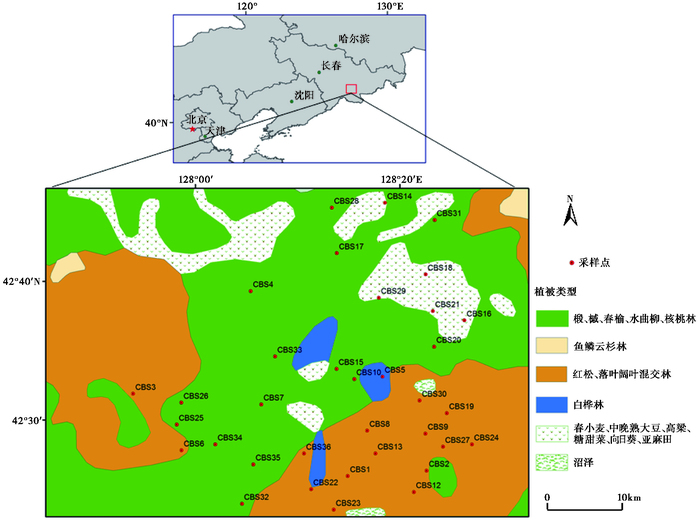
Figure 1.
Study area and vegetation distribution around the sampling points of Changbai Mountains
-
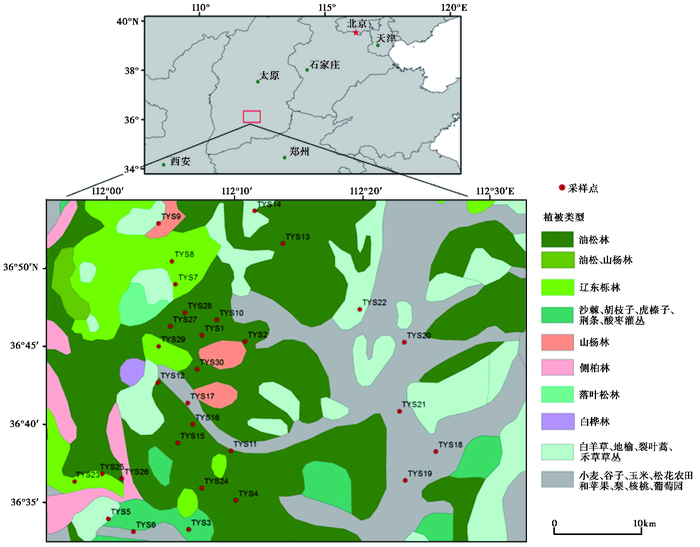
Figure 2.
Study area and vegetation distribution around the sampling points of Taiyue Mountains
-
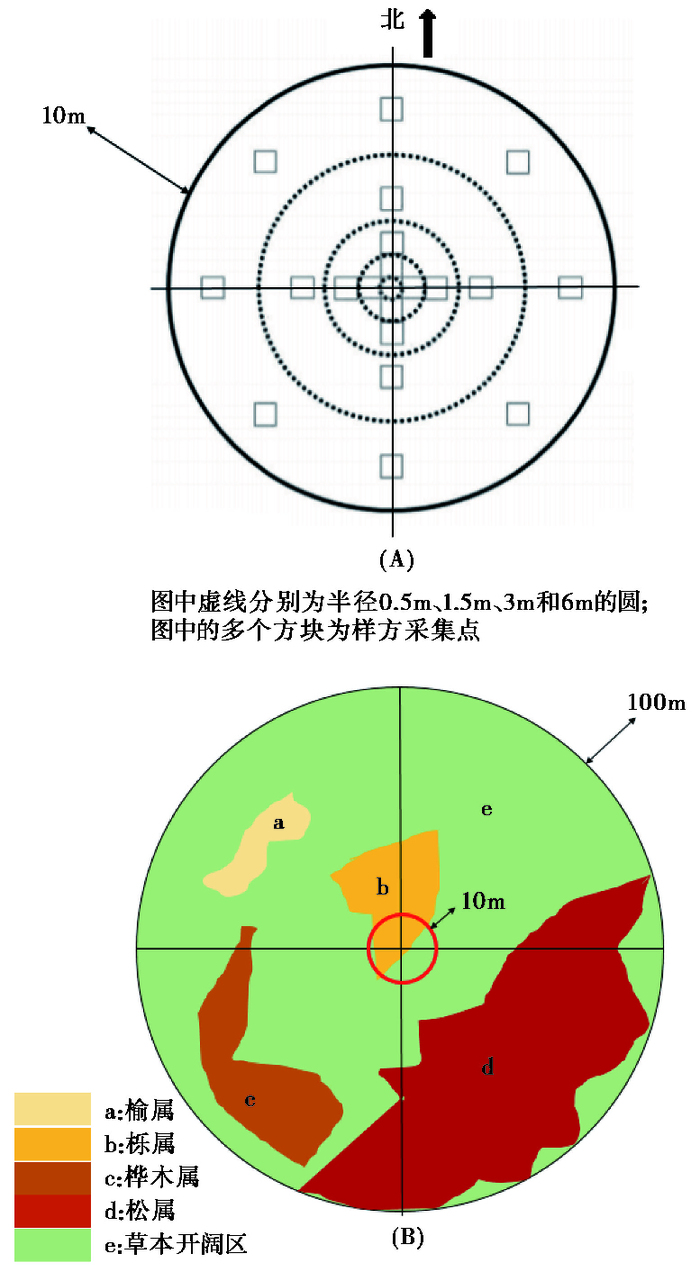
Figure 3.
Central sample point in 10m range (A)and vegetation survey in 100m range(B, the area of a, b, c, d and e stand for different vegetation composition separately, the red circle area stands for the central sample point range)
-
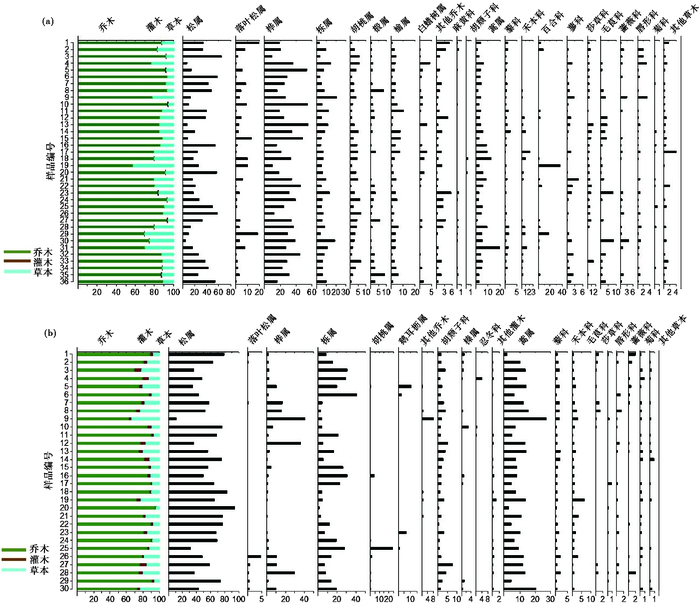
Figure 4.
Pollen assemblages of Changbai Mountains(a) and Taiyue Mountains (b)
-
Figure 5.
Log-likelihood function score plot for sub-models 1, 2, and 3 from Changbai Mountains
-
Figure 6.
RPP(Relative Pollen Productivity)estimates of 11 pollen types from Changbai Mountains
-
Figure 7.
Log-likelihood function score plot for sub-models 1, 2, and 3 from Taiyue Mountains
-
Figure 8.
RPP(Relative Pollen Productivity)estimates of 10 pollen types from Taiyue Mountains
-
Figure 9.
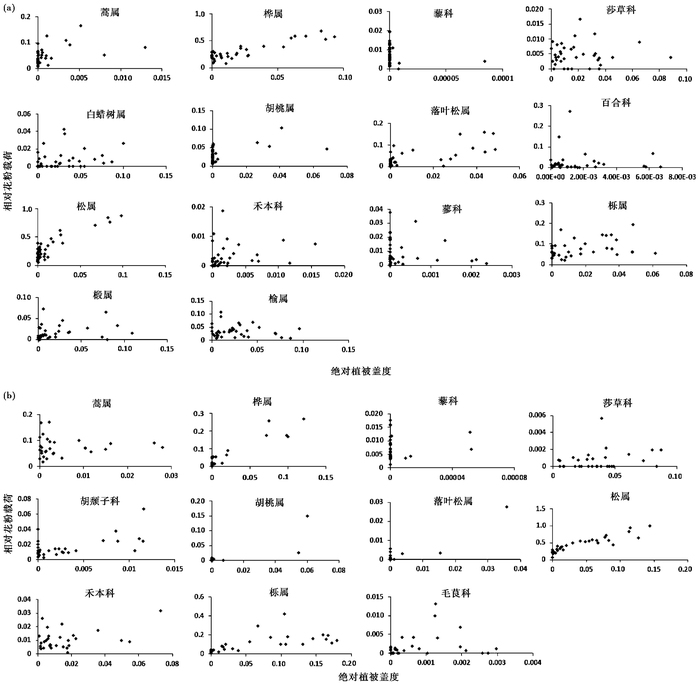
Relationship between pollen and vegetation.(a)Changbai Mountains; (b)Tiayue Mountains
-
Figure 10.
RSAP under different wind speeds. (a)RSAP of Changbai Mountains under average and maximum wind speeds; (b)RSAP of Taiyue Mountains under average and maximum wind speeds
-
Figure 11.
RSAP under different fall speeds, "ERV sub-model 3-①" stands for running the ERV sub-model 3 with this paper's fall speeds and "ERV-sub-model 3-②" stands for running the ERV sub-model 3 with published fallspeeds in Li et al.[20]